



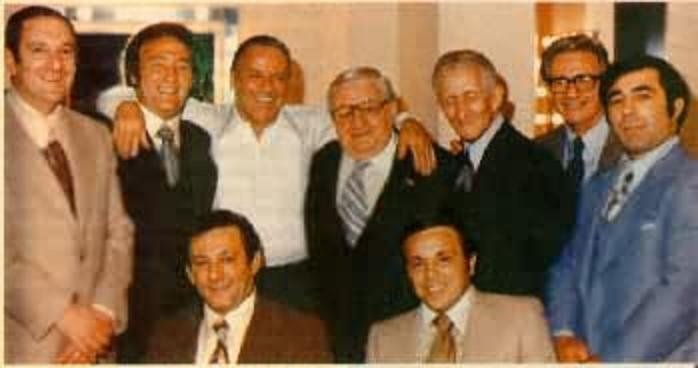


The name Paul Castellano carries real historical weight. Most people who hear it immediately think of organized crime, New York, and a story that ended violently in 1985. But when people search for “Paul Castellano Jr.” specifically, they usually find something far less dramatic — a handful of genealogy database entries and scattered family tree fragments.
This article walks through what public records actually show about the Castellano family name, why multiple “Paul Castellanos” appear in databases, and why detailed personal information about modern relatives is hard — and often impossible — to find.
The Name Behind the Search — Paul “Big Paul” Castellano
To understand why “Paul Castellano Jr.” attracts curiosity, you first need to know who most people are thinking of when they hear the Castellano name.
Genealogy records list him as Costantino Paul Castellano, born on June 26, 1915, in Brooklyn, New York. He became publicly known as the head of the Gambino crime family and was assassinated in New York around 1985. His death was widely covered and remains one of the most documented events in American organized crime history.
One small but interesting family detail comes from a Facebook post in The American Mafia group: his middle name, Salvatore, was reportedly given in honor of his oldest brother, who had died two years before his birth. This is a common Italian naming tradition and helps explain the layered naming patterns that appear throughout the Castellano family tree.
Marriage records on MyHeritage show that Nina Castellano married Costantino Paul Castellano in New York in 1937, when she was 20 years old. He also had a documented sister named Catherine Castellano. These are the kinds of confirmed, basic facts that genealogy platforms capture well — names, dates, and places.
It is worth being clear: this is a social media source for the middle name detail, not a primary historical record. It adds useful color, but should be treated as supporting context rather than definitive fact.
What Public Records Actually Show About Paul Castellano Jr.
Here is where the trail gets thin. No mainstream biographical source — no news archive, no published biography, no court document — documents a specific “Paul Castellano Jr.” as a public figure in his own right.
The name appears almost exclusively in MyHeritage and Ancestry-style family tree records. These are genealogy platforms where users build and share family data. The entries may be accurate, but they reflect what individual users have uploaded — not independently verified historical records.
Public sources do not explicitly confirm a direct father-son relationship between the Brooklyn mob boss and anyone specifically labeled “Jr.” That connection may exist, but it is not something confirmed records currently support in a clear, documented way.
This is actually very common for private relatives of historically notable people. Once you move past the public figure, information about their family members drops off sharply. That limited footprint is not unusual — it is often intentional, and it deserves to be respected.
Two Separate Family Lines — Brooklyn and Florida
One of the biggest sources of confusion around the Castellano name is that multiple people named Paul Castellano appear in genealogy records — and they belong to entirely different family branches.
MyHeritage records document a Joe Castellano, born in 1913 in Florida, who had seven siblings. One of those siblings was also named Paul Castellano. This is a Florida-based Castellano family branch that appears to have no clear connection to the Brooklyn mob boss.
Separately, MyHeritage lists a Paul Castellano born around 1925 in Florida, married to Rose Carol (Rosie) Lumia, with four children. Ancestry records appear to corroborate this with an entry for Paul C. Castellano, born January 24, 1925, in Tampa, Florida, and died September 2, 2004, in Tampa.
This Florida Paul and the Brooklyn-born Costantino Paul Castellano (born 1915) are almost certainly two different people. The birth years, locations, and family structures are all distinct.
Here is why this matters for the “Jr.” question: if the Florida Paul Castellano (born 1925) had a son named Paul, that son would naturally be called “Paul Castellano Jr.” in everyday use — even if genealogy records never officially label him that way. It is a completely ordinary naming pattern, and it would have nothing to do with the New York mob boss.
So when someone searches for “Paul Castellano Jr.” and lands on genealogy records, they may actually be looking at a Florida family branch with no connection to organized crime history at all.
How to Read These Genealogy Records Without Conflating Them
Genealogy platforms like MyHeritage and Ancestry do one thing well: they record names, dates, places, and family relationships. What they do not do is write verified biographical narratives or confirm whether two people with the same name are actually related.
Take a simple example. A MyHeritage entry showing “Nina married Costantino Paul Castellano in 1937 in New York” tells you three useful things: the year, the place, and the husband’s full name. That is genuinely helpful for genealogical research. It does not tell you anything about their children, grandchildren, or whether any of them used the name “Jr.”
When you are looking at Castellano family records, a few things help you stay oriented:
- Birth year and location are the fastest way to separate the Brooklyn line from the Florida line.
- Sibling lists help confirm which family branch you are in.
- Spouse names like Nina (Brooklyn) vs. Rose Carol Lumia (Florida) make the branches easy to tell apart.
- If a record does not explicitly say “Jr.,” do not assume it implies one.
The same name appearing in two separate database entries does not mean those entries refer to the same person. With a surname like Castellano — and a first name as common as Paul — duplicates across unrelated families are expected.
For anyone doing serious genealogy research, cross-referencing birth years, locations, and spouse names is the most reliable way to figure out which Paul Castellano you are actually looking at. Searching by birth year alongside location will filter out most of the confusion quickly.
Why Information About Modern Relatives Is Limited
There is a straightforward reason why detailed information about “Paul Castellano Jr.” — whoever he may be — is difficult or impossible to find in mainstream sources. Private individuals are not public figures.
Being related to someone historically famous does not make a person’s life public record. Children, grandchildren, and other descendants of notable historical figures often live entirely private lives. Genealogy databases may show their names and basic dates, but that is the extent of it.
This is actually the responsible way for things to work. The notoriety of Paul “Big Paul” Castellano belongs to him and to the historical record. It does not automatically transfer to everyone who shares his last name or family tree.
For people curious about the Castellano family from a true-crime or genealogy angle, the Seismicbusiness perspective is useful here: understanding context and background is valuable, but reading speculation into limited records often leads to false conclusions.
What We Can Reasonably Say
Pulling all of this together, here is an honest summary of what public records actually support:
- Paul “Big Paul” Castellano was a real, well-documented historical figure born in 1915 in Brooklyn, married to Nina in 1937, and killed in 1985.
- A separate Florida-based Castellano family includes a Paul Castellano born in 1925 in Tampa, married to Rose Carol Lumia, with four children — almost certainly unrelated to the Brooklyn mob boss.
- “Paul Castellano Jr.” as a specific named individual does not appear as a confirmed, documented public figure in any mainstream source.
- The name most likely refers to a son of one of the Paul Castellanos in the genealogy record — possibly the Florida branch — but public sources do not confirm which branch or provide personal details.
- Any living or recently deceased relative carries no public obligation to be part of the historical narrative surrounding their famous or notorious family member.
A Final Note on Searching This Name
If you came here curious about Paul Castellano Jr. because of the famous mob boss, that curiosity makes sense. The Castellano name is tied to one of the most documented chapters in American organized crime history, and it is natural to wonder what happened to the family afterward.
But genealogy records are not biographies. They show names and dates, not stories. And the absence of a rich public record for “Paul Castellano Jr.” is not a mystery — it is simply what private life looks like compared to public history.
The most accurate thing to say is this: multiple people named Paul Castellano exist across different family branches, at least two of which are well-documented in genealogy databases. Whether any of them used the “Jr.” label, and what their lives looked like, remains largely outside the reach of public records — and that is exactly as it should be.
Read Also: